
Key information
| Entry qualifications | BBB |
|---|---|
| Course duration | 1 year |
| UCAS codes | L0VF |
| Admissions test | TARA |
| Application deadline | 13 January 2027 |
About the course
The Foundation Year in Philosophy, Politics and Economics (PPE) introduces you to these three disciplines, which offer important and complementary ways to understand our society. You will study core topics in philosophy, politics and economics alongside a mathematics module, developing the knowledge and skills needed for undergraduate study.
Through your studies, you will build skills in reasoning, critical thinking, critical discussion and writing. You will learn how to approach complex problems and arguments, evaluate different arguments and apply ideas from across the three subjects to understand real-world issues.
Preparation for Undergraduate Studies
Alongside your subject studies, you will take the Preparation for Undergraduate Studies course. This will help you develop core academic skills, including academic writing and communication skills, and opportunities for reflective practice, to support your progression to undergraduate level.
Entry requirements
The typical A-level entry requirements are BBB.
There are no specific subjects requirements or Philosophy, Politics and Economics with Foundation Year.
- History provides a useful background, but is not essential.
- Mathematics is not formally required, but PPE applicants should have sufficient interest in, and aptitude for, mathematics to cope with the mathematical elements of the course. Mathematics is a particular advantage for the Economics component of the course, as well as for the first year logic course in philosophy, and for understanding theories and data in politics. Many successful applicants have studied Maths to at least AS-level, or another equivalent.
We do accept other types of qualifications. More information about the academic entry requirements and accepted qualifications is available on the Foundation Year in PPE course page on the University of Oxford website.
All applicants must take the Test of Academic Reasoning for Admissions (TARA) as part of their application.
Admissions test
| Test of Academic Reasoning (TARA) | Taking the test in October 2026 | Taking the test in January 2027 |
|---|---|---|
| Test window | 12th to 16th October 2026 | 4th to 8th January 2027 |
| Registration opens | 1st June 2026, 3pm UK time | 5th October 2026, 3pm UK time |
| Test booking | 20th July to 28th September 2026, 6pm UK time | 26th October to 21st December 2026, 6pm UK time |
| Deadline for requesting access arrangements | 14th September 2026, 6pm UK time | 7th December 2026, 6pm UK time |
| Deadline for requesting a bursary | 21st September 2026, 6pm UK time | 14th December 2026, 6pm UK time |
All applicants must take the Test of Academic Reasoning for Admissions (TARA) as part of their application. This must be taken before submitting your UCAS application and requires advance registration. This means that you should begin preparing your application earlier than in previous admissions cycles.
TARA is a computer-based admissions test designed to assess academic reasoning skills, including critical thinking, problem-solving and written communication. The test is intended to evaluate how applicants think through complex ideas and arguments, rather than testing specific subject knowledge. No specific knowledge assumed, but it is a good idea to familiarise yourself with the format of the test and try to do some practice.
All Oxford applicants must take all three modules (Critical Thinking, Problem Solving and the Writing Task).
Foundation Year applicants can take the TARA in either the October or January test window. Please visit the Admissions tests page on the University website for more information.
Visit the UAT-UK website for all information about:
- when and how to book your test appointment
- when and how to apply for access arrangements and bursaries
- how best to prepare for your test
- what to expect on the day of your test.
Bursaries for admissions tests
Candidates in financial need may be eligible for a bursary to cover the full cost of the TARA admissions test. The bursary scheme is offered directly by UAT UK.
Bursaries are available for candidates who meet specific eligibility criteria, including applicants in receipt of Free School Meals, the 16–19 Bursary, or certain means-tested benefits. Supporting evidence is required as part of the application process. Applications for bursaries are made through your UAT-UK online account before booking your test.
- If you intend to take the test in October 2026, you must apply for a bursary by 21st September 2026, 6pm GMT.
- If you intend to take the test in January 2027, you must apply for a bursary by 14th December 2026, 6pm GMT.
Further information about eligibility and the application process is available on the UAT-UK bursary scheme website.
Subject pathways
PPE with Foundation Year
Subject requirements
No specific subjects, but Maths is recommended.
Admissions test
TARA
Teaching staff

Dr Natalie Quinn
"The Philosophy, Politics and Economics degree at Oxford brings together a broad range of approaches to understanding the world in which we live, which our graduates go on to apply in a variety of careers. Its Foundation Year provides an opportunity to develop the academic skills needed to thrive as an undergraduate student of PPE, while studying foundational topics in Philosophy, Politics and Economics."

Dr Alexander Kaiserman
"PPE is a unique course that encourages students to think about the challenges of the modern world from three different but complementary perspectives. You'll be challenged to develop your own views, develop the skills to think clearly and critically, and meet people from all over the world."

Dr Matthew Parrott
"Philosophy is a subject that teaches you a lot of incredibly useful and foundational skills – how to think carefully about problems, how to write clearly and persuasively, and how to reason in a coherent, logical way. All of these skills are valuable, not only for pursuing a PPE degree at Oxford, but for pursuing any degree, and any career. The Foundation Year focuses on developing the key building blocks necessary for further study in philosophy, and the Philosophy Faculty at Oxford is consistently recognised as one of the best in the world."
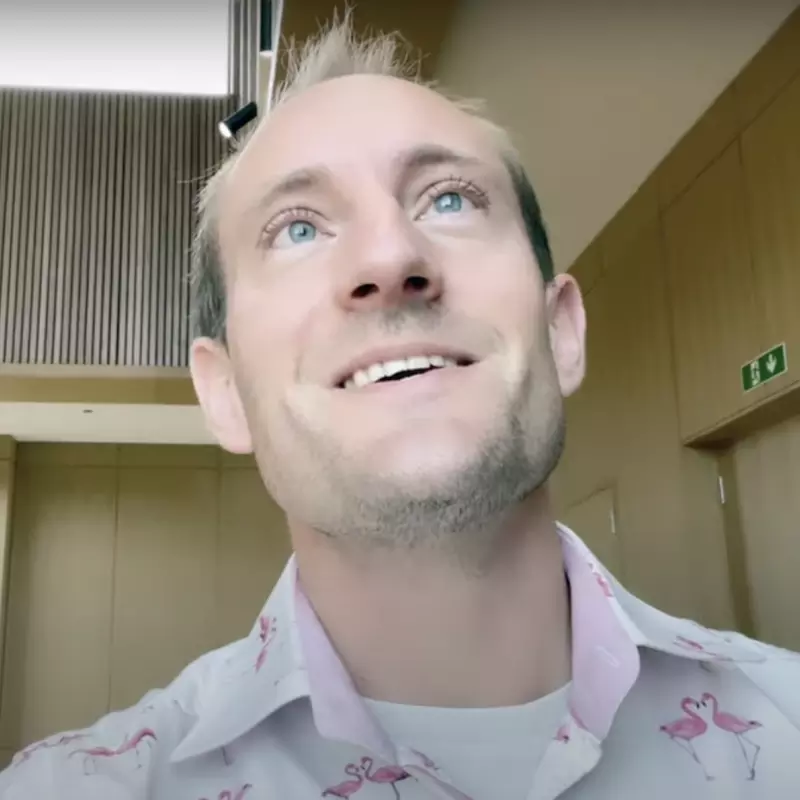
Dr Matthew Williams
"Philosophy, Politics and Economics (PPE) is a one-hundred year old course at Oxford, but it is by no means old fashioned. With this Foundation Year course, PPE will be revitalised like never before, with support for the most disadvantaged students to access this fascinating set of subjects."
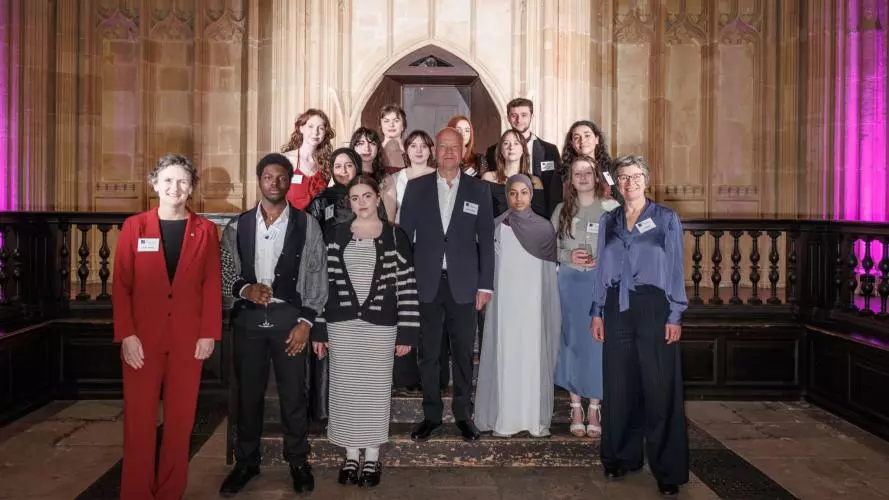

Philosophy, Politics and Economics (PPE) arose from the belief that the advanced study of all three subjects would transform students' intellectual lives, to great social benefit. This conviction remains as firm today as it was then. As the world has evolved, so has PPE. The course brings together some of the most important approaches to understanding the world around us, developing skills useful for a wide range of careers and activities.
PPE helps students to develop a wide range of skills to a high level. Oxford PPE students have gone on to work in a variety of careers, including business, charity work, education, financial services, law, and public service.
You can read more about the subject and undergraduate degree on the PPE website.